| Anne-Marie Sivyer Pilates instructor |
| Home |
|---|
My particular approach to Pilates. Having worked as an Osteopath for over 25
years and I found it very effective to use a combination of Osteopathy and
Pilates in order to help my patients maintain and enjoy a healthy active
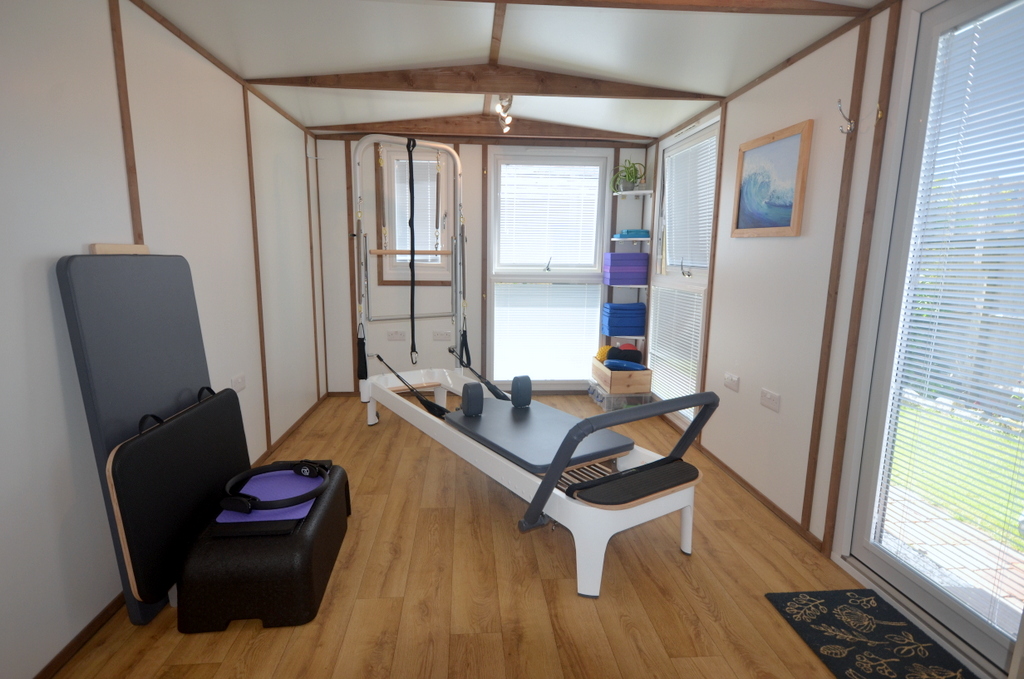
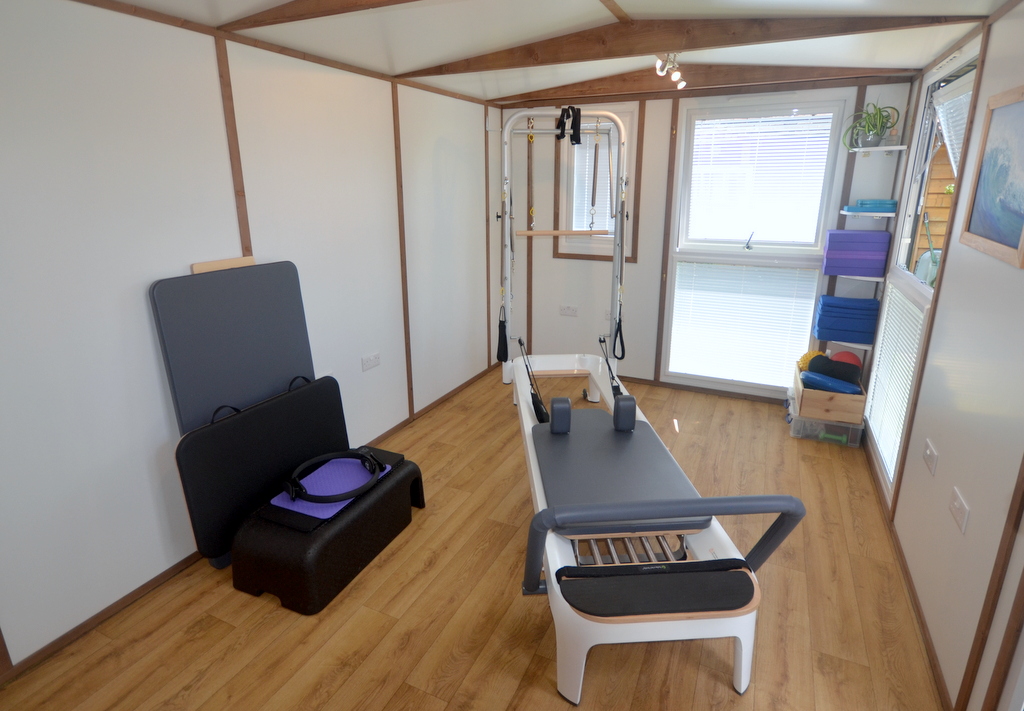
lifestyle. Often a patient's first call would be to the clinic, where we would investigate and release muscle and soft tissue tensions that are restricting free flowing movement and causing pain. However I often see that these muscle and joint restrictions are due to poor movement patterns or a weak core and so continuing with a course of Pilates enabled me to work over a longer time period to help the client re-train those patterns. I now use the Pilates reformer in my 'one to one' sessions in the clinic in Hawkley.
In my Pilates classes, I use a mixture of the original classical exercises as taught by Joseph Pilates, and include small equipment, such as soft balls, magic circles and weights to enhance the exercises and give variety. The long roller is also included to assist with myofascial release as well as plenty of stretches. (The roller assists with massaging out those tight knots!)
What is Pilates? Pilates was developed by German-born Joseph
Pilates who believed mental and physical health were closely connected. Pilates
immigrated to the USA in the 1920s and opened a studio in New York where he
taught his method, which he called "contrology" – for several
decades. Pilates aims to strengthen and rebalance the
body, with particular emphasis on core strength, to improve general fitness and
mental wellbeing. It is complementary to, and enhances, your other physical
activites. Pilates exercises are done on a mat
(sometimes with balls, rings or weights) or using special equipment, such as
the reformer. The reformer, with its system of pulleys and springs, can provide
either resistance or support, depending on your individual needs. Pilates has something to offer people of all
ages and levels of ability and fitness, from beginners to elite athletes. Practitioners say regular pilates can improve
posture, muscle tone, balance and joint mobility, as well as relieve stress and
tension. For elite athletes, including dancers, pilates can complement training
by developing whole-body strength and flexibility, and help reduce the risk
of injury. Can Pilates help back pain? There's some evidence that pilates can
provide pain relief to people with non-specific lower back pain. The use of
apparatus enables someone with back pain to perform exercises with support. For the exercises to be effective, they need
to be tailored to the individual and vetted by an appropriately qualified
health professional. The numbers attending classes is
closely monitored and therefore all clients must use the booking
system. New Clients are requested to email me to
book a telephone consultation before starting any class. They must also
complete the pre-course
questionaire.
|
|---|
About |
| Pilates |
|---|
| About Pilates |
|---|
| Pilates Classes |
| Pre-Course Questionaire |
| Fees and Times |
| Directions |
| Contact and booking |
|---|
| Links |